



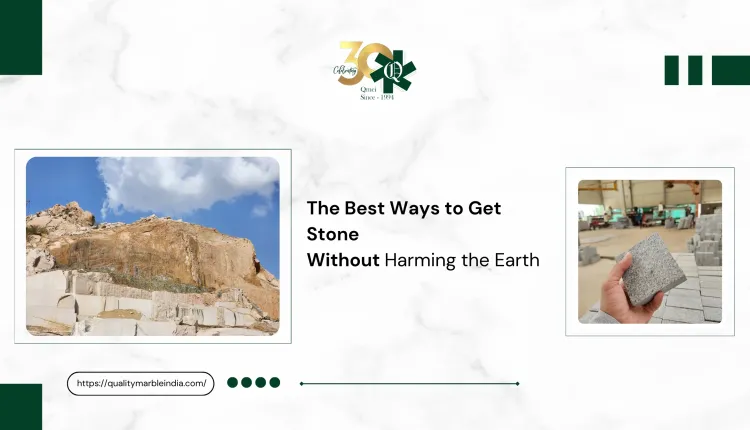
There is a huge transformation going on in the natural stone business around the world. People all across the world demand high-quality marble and granite guided by natural stone colour psychology. More and more buyers are putting mined materials that are safe for the environment and mined responsibly at the top of their choices. Companies who are ahead of the game are developing stone goods that are beneficial for the environment and help keep natural resources safe. Not only will people want you to be sustainable in 2026, they will expect you to be. Architects, builders, and governments all want stone that is beneficial for the earth. This adjustment gives honest suppliers a tremendous chance to show that they are better than the rest. This detailed guide talks about the best ways to buy stone in 2026 that are healthy for the environment, why they are vital, and how Quality Marble Exports (India) and other businesses are raising the bar in the sector. It talks about being honest, getting certified, dealing with problems that come up in the future, and finding answers. It also teaches about reusing water, preserving electricity, and getting rid of trash in a responsible Way.
1. Why it will be vital to collect stone in a method that doesn't affect the environment in 2026
1.1 The Effects of Traditional Quarrying on the Environment
To mine stone the old-fashioned method, you need a lot of explosives, water, and power while ignoring sustainable natural stone principles. If quarrying isn't done properly, it might cause:
- Hurt land
- Death of numerous different species of animals
- There is too much trash and dust
- Pollution of water
- A greater carbon footprint
These effects are worse in regions where the environment is already fragile.
1.2 How the needs of the market and customers are evolving
Architects, engineers, designers, and homeowners all desire building materials that come
from places that are beneficial for the environment. Stone that lasts a long time can help
constructions get:
- BREEAM certifications
- Certifications from LEED
Other certifications for structures that are healthy for the planet
1.3 Good things for the rules and reputation
When a brand employs stone that is certified and healthy for the environment, it looks nicer.
ISO 14001, for example, illustrates that a company is good at keeping the environment safe when delivering sustainable natural stone.
2. Easy Ways to Get Stone That Are Good for
the Earth
2.1 Using water in a way that keeps it in a circle and preserves
it
Quarries now use the water they use to cut, polish, and manage dust again. Closed-loop
systems cut down on the need for fresh water by 80% to 98%.
Zero Liquid Discharge (ZLD) stops untreated wastewater from leaving the property.
2.2 Responsible Extraction and Block Optimisation
New technologies make things more accurate and cut down on waste. Block-optimization software makes sure that all blocks are used Diamond wire saws cut down on blasting and energy use When the quality of the stone calls for it, traditional hand-cutting is used
2.3 Renewable Energy and Energy Efficiency
A lot of units now use:
- Plants that use solar energy
- Machines that don't use a lot of power
- Processes that run on their own
- IoT systems for upkeep
2.4 The Circular Economy and Getting Rid of Waste
Sustainable units turn stone debris into:
- Rocks for landscapingStone that has been used
- Materials for terrazzo
- Parts made of concrete
2.5 Protecting different kinds of plants and animals and cleaning up ancient quarries
Restoration that is good for the environment includes:
- Filling up holes that were dug
- Putting in plants that are natural to the area
- Making wetlands
- Collaborating with NGOs
2.6 Being accessible and easy to follow
Blockchain and Life Cycle Assessments are examples of technologies that help explain how
the stone got from the quarry to the project while preserving hygienic natural stones.
3. How Quality Marble Exports (India) Sets an Example for Sustainability
3.1 Strong Quality Control and Certifications
The business has:
- ISO 14001
- ISO 9001
3.2 New, machine-operated quarries
Fully mechanised quarries use:
- Saw blades
- Optimising blocks
- Cutting systems that are controlled
3.3 Putting money into saving energy and water
The business uses:
- Water that has been recycled
- Power from the sun
- Intelligent technologies
3.4 Good Ways to Throw Away Trash
Terrazzo tiles and fillers are made from marble dust, chips, and aggregates.
3.5 Responsible Quarry Restoration
Includes:
- Restoration in stages
- Making an eco-zone
- Taking part in the community
3.6 Technology for Being Open
- Shows customers:
- Stone origin
- Certifications for the impact on the environment
4. Why You Should Get Stone from Sources That Are Good for the Environment
4.1 Certifications for Buildings That Are Green
Using stone that lasts helps projects get:
- BREEAM
- LEED
- IGBC
4.2 Less Risk in the Supply Chain
Traceability cuts down on delays and legal dangers.
4.3 Saving Money Over Time
Stone that is taken out of the ground in a responsible way lasts longer and needs less care.
4.4 A better name for the company
People that care about the environment trust companies that are sustainable more
5. Issues with the business and how to fix Them
5.1 Costs Up Front Are High
Putting money into clean energy and technology can cost a lot.
Use green financing and stress how much money you may save in the long run.
5.2 Need to Learn New Skills
People who work may not desire to attempt new things.
Training sessions and working with NGOs are helpful.
5.3 Not Knowing About the Market
Use:
- LCAs
- Certifications
- Data that is easy to understand
5.4 Problems with Keeping Track
Start with QR systems and then go on to blockchain.
6. What Will Happen to the Stone Industry After 2030?
6.1 Working Without Releasing Gases
Use less carbon and switch to renewable energy.
6.2 New ideas for the circular economy
Make by products into:
- Materials for landscaping
- Tiles for terrazzo
- Fillers in powder form
6.3 Rehabilitation Led by the Community
- Old quarries can turn into:Parks
- Wetlands
- Eco learning areas
6.4 Total Openness
Dashboards that anyone can see that show where the quarry comes from and how good the
environment is.
6.5 Investing in research and development (R&D)
Innovation labs that study AI, recycling, and stone made in factories.
Last Thoughts
The stone industry will be based on sustainable sourcing in the future. Companies that quarry
properly, recycle water, cut down on trash, and stay open will be the best in the world.
Quality Marble Exports (India) proves that you can care for the environment and sell high-
quality stone at the same time. By doing these things, buyers and builders may receive
natural stone that lasts a long time and is good for the environment.


